The lubricant mistake that breaks condoms, and how to tell which type you have
SOK
14 September 2026 · 8 min read
Almost everybody knows lubricant and condoms go together. Far fewer people know that one common category of lubricant destroys the most common type of condom, quietly, in under a minute, with no warning that anything has gone wrong until it has. It is one of those facts that is completely settled in the clinical guidance and almost never printed on the packaging.
The short answer
- Latex condoms: water-based or silicone-based lubricant only.
- Never oil on latex. That includes coconut oil, massage oil, body lotion, petroleum jelly and cooking oil.
- Polyurethane and other synthetic condoms tolerate oil, but latex is what almost everyone is using.
- Silicone lubricant lasts longer but should not be used with silicone toys.
- If the label does not say which type it is, treat it as unknown and do not use it with a condom.
Why oil and latex do not mix
Latex is a natural rubber. Oils break down the polymer structure, and they do it quickly — fast enough that the damage is done during use rather than over weeks in a drawer. This is not a marketing claim from a lubricant brand. It is in the clinical guidance. The US Centers for Disease Control and Prevention's STI treatment guidelines on primary prevention state that only water-based or silicone-based lubricants should be used with latex condoms, and that oil-based lubricants — the guidance names petroleum jelly, shortening, mineral oil, massage oils, body lotions and cooking oil — can weaken latex and should not be used. The same guidance notes the exception: polyurethane and other synthetic condoms are more resistant and are compatible with both oil-based and water-based lubricants. That exception is real, and it is also not much help to most people, because latex is what is sold in almost every pharmacy and convenience store in Cambodia. There is also a wider question the research has taken seriously: whether a lubricant that does not break the condom might still cause harm on its own. A review published in the peer-reviewed literature on the compatibility and safety of personal lubricants examined both condom compatibility and effects on tissue, and found that the household substances people improvise with are the worst performers on both counts. Improvising is the problem, not lubricant.
The three types, and how to tell them apart
Water-based
The default, and the safest general answer. Compatible with latex condoms and with every material of toy, including silicone. Washes off with water. Costs the least. The trade-off is that it dries out and needs reapplying, and in Cambodia's heat it dries faster than the bottle's country of origin assumed. A little water reactivates most water-based gels rather than requiring more product. How to recognise it: the first ingredient is water or *aqua*. It rinses off skin with plain water in seconds and leaves no film.
Silicone-based
Lasts far longer, does not dry out, and is compatible with latex condoms. Better in heat for exactly that reason. Two catches. It should not be used with silicone toys — over time silicone lubricant degrades silicone surfaces, which is the most commonly repeated warning in this category and the most commonly ignored. And it does not wash off easily with water alone; it needs soap, and it stains fabric. How to recognise it: ingredient names ending in *-methicone* or *-siloxane* — dimethicone and cyclopentasiloxane are the usual ones. It feels slippery rather than wet, and water beads on it instead of rinsing it away.
Oil-based
Includes both purpose-made oil lubricants and everything improvised from a kitchen or bathroom shelf. Safe only with synthetic non-latex condoms, or with no condom at all in a context where that is an informed choice. Never with latex. Also harder to wash out of fabric and, for some people, more likely to cause irritation. How to recognise it: oils and butters near the top of the ingredient list, an oily rather than slippery feel, and a film left on the skin that plain water will not remove.
Checking the product you actually have
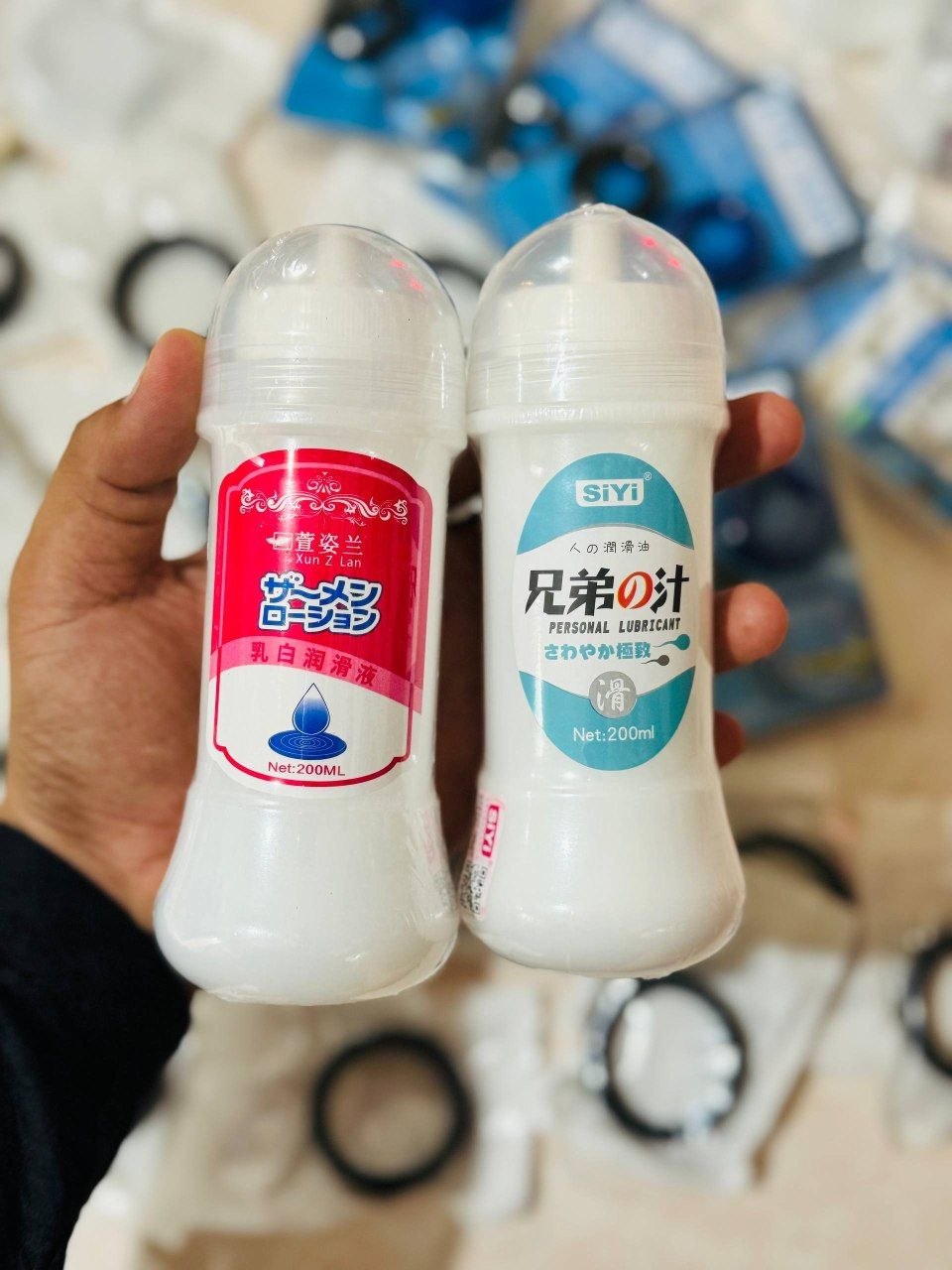
This is the practical part, because a great deal of what is sold in this region carries a label in a language the buyer does not read, or no ingredient list at all.
- Read the ingredient list first. Water first means water-based. A *-methicone* or *-siloxane* means silicone. Oils or butters mean oil.
- If there is no ingredient list, do the water test on your hand: water-based rinses clean instantly, silicone needs soap, oil leaves a film.
- If you cannot tell, do not pair it with a latex condom. Use a lubricant you can identify.
- Check the expiry date. Heat here shortens the life of everything.
We would rather you did this check on our product than take our word for it. If a lubricant's own page does not tell you which type it is, that is a fair reason to ask before buying — including on this site.
Matching lubricant to what you are using it with
Condoms are only half the compatibility question. The other half is everything else, and the rules are short enough to memorise.
- **Latex condom** — water or silicone. Never oil.
- **Polyurethane or synthetic condom** — anything, including oil.
- **Silicone toy** — water only. Silicone lubricant degrades silicone surfaces over time, leaving them tacky and eventually damaged.
- **Silicone ring** — water only, same reason. This one matters twice over, because lubricant is also what makes a ring easy to remove, which is covered in choosing and using a ring safely.
- **Glass, steel or ABS plastic toy** — water or silicone both fine.
When in doubt across any combination, water-based is the answer that is never wrong. That is the reason it is the default recommendation rather than the cheapest one.
Using too little is the most common mistake
Most lubricant failures are not the wrong type. They are not enough of the right type. Friction is what breaks condoms, and insufficient lubricant produces friction in exactly the place the condom is thinnest. Reapplying during use is normal and is not a sign that something is wrong with the product — particularly with water-based gel in this climate, where evaporation is faster than the manufacturer's home market assumed.
- Apply more than feels necessary at the start.
- Reapply rather than pushing through increasing friction.
- For water-based gel that has gone tacky, a few drops of water restores it — more product is often not needed.
- Apply to the outside of the condom, and a small amount inside the tip before putting it on.
Irritation, and what usually causes it
If a lubricant stings or causes soreness, it is usually an additive rather than the base. The peer-reviewed review linked above examined effects on tissue as well as condom compatibility, and the general finding is that plainer formulations are gentler. The usual suspects, in rough order of how often they come up:
- Warming, tingling and cooling additives. These work by irritating tissue, which is the sensation.
- Fragrance and flavouring.
- High glycerin content, which some people find drying, and which is worth knowing about for anyone prone to thrush.
- Preservatives, in a minority of people.
A plain, unscented, additive-free water-based gel is the safest starting point. If something causes soreness, stop using it rather than assuming it will settle, and pick a simpler formulation rather than a different brand of the same thing. Never substitute soap, shampoo, shower gel or saliva. Soap products are strong irritants to internal tissue, and saliva provides almost no lubrication while carrying its own infection considerations.
If a condom breaks
Worth knowing before it happens rather than after.
- Stop, and do not assume it was fine.
- Emergency contraception is available at pharmacies in Cambodia and works better the sooner it is taken.
- HIV post-exposure prophylaxis, if relevant, must be started within 72 hours and is more effective the earlier it begins. That is a hospital or clinic conversation, and it is time-sensitive.
- Testing is worth doing regardless of how the conversation goes.
None of that is comfortable reading on a shop's website. It is still better than not knowing the 72-hour window exists.
Storage in this climate
Heat degrades condoms and dries out water-based gel. A wallet, a car and a motorbike box are all bad places for a condom, for the same reason a dashboard is a bad place for anything in Cambodia. Keep both somewhere cool, dark and interior. The same reasoning applies to other products we sell, in a more extreme form, which is set out in storing products in Cambodia's climate.
Elsewhere on this site
If you are shopping for accessories rather than lubricant alone, the sizing and safe-wear question for rings is a separate and genuinely important subject: how to choose and use a ring safely, including the time limit that most packaging never mentions. The full catalogue is at the shop, payment options are explained in paying in Cambodia, and delivery is covered in the delivery guide.
Common questions
- Can I use coconut oil as lubricant with a condom?
- Not with a latex condom. Oils weaken latex quickly enough to cause failure during use. Clinical guidance names cooking oils, body lotions, petroleum jelly and massage oils among the substances that should not be used with latex.
- Which lubricant is safe with latex condoms?
- Water-based or silicone-based. Both are compatible with latex; oil-based is not.
- What is the difference between water-based and silicone-based lubricant?
- Water-based washes off with water, works with every toy material including silicone, and dries out faster — particularly in Cambodia's heat. Silicone-based lasts much longer and does not dry out, but needs soap to wash off and should not be used with silicone toys.
- Can I use silicone lubricant with a silicone toy?
- No. Silicone lubricant degrades silicone surfaces over time. Use water-based with silicone toys.
- How do I tell what type a lubricant is if the label is unclear?
- Check the ingredients — water or aqua first means water-based, an ingredient ending in -methicone or -siloxane means silicone, oils or butters mean oil-based. If there is no list, rinse a little off your hand with plain water: water-based goes instantly, silicone needs soap, oil leaves a film.
- Does lubricant expire?
- Yes, and heat shortens its life. Check the date, and store it somewhere cool and dark rather than in a bathroom, a car or a bag that sits in the sun.
- What should I do if a condom breaks?
- Emergency contraception is available at Cambodian pharmacies and works better the sooner it is taken. If HIV exposure is a concern, post-exposure prophylaxis must begin within 72 hours and is more effective the earlier it starts — that means going to a clinic or hospital the same day rather than waiting.
// Tags